


The World Is A Wedding
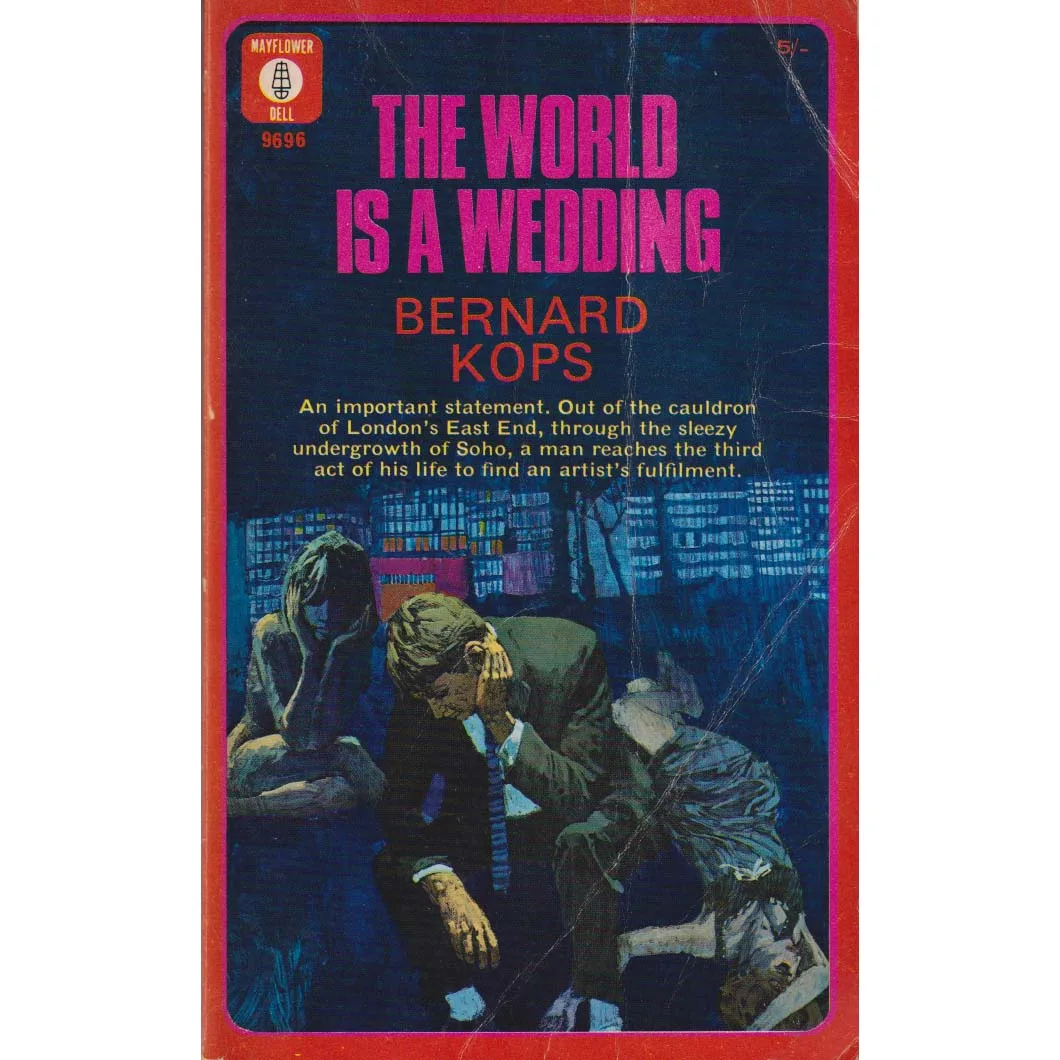
Publisher: Mayflower
Format: Paperback
ISBN: none
The World is a Wedding (1966) by Bernard Kops is a Mayflower paperback with the cheerful audacity to suggest that life is one long celebration—while quietly acknowledging that half the guests are arguing in the kitchen, someone’s crying in the hallway, and the band has definitely played this tune before. It’s a novel that arrives wearing confetti and carrying a hangover, equal parts warm-hearted, sharp-edged, and stubbornly human.
Kops writes with that very particular mid-century London electricity: the streets feel close, the voices are loud, the emotions are immediate, and the optimism—when it appears—has had to fight for its place at the table. There’s a theatrical quality to it, too: scenes that feel like they’re happening under bright lights, dialogue that wants to be overheard, and characters who can’t help but perform themselves even when they’re trying to be sincere. It’s funny, until it isn’t. It’s tender, until it bites. It’s romantic, in the way real romance is romantic: slightly frazzled, full of interruptions, and always one rent bill away from tragedy.
The title is doing a lot of work here, and the book knows it. A wedding is supposed to be the neat, ceremonial moment where everyone agrees what happiness looks like. Kops, being Kops, is more interested in the messy backstage reality: the longing, the social pressure, the family history, the private doubts, the public grin. The world as a wedding means everyone is invited, nobody is fully prepared, and the seating plan is an act of quiet violence.
This is Mayflower in its natural habitat—paperback fiction with a pulse, sold to people who wanted something vivid and immediate for the train home, and who didn’t mind if the story got a bit too close for comfort. Condition: Good, which is exactly right: a copy like this should have a bit of life in it. A pristine one would feel suspicious, like it’s never been opened during a minor emotional wobble.
ISBN: none, because it’s 1966 and the universe hadn’t yet decided to number every human experience for ease of tracking. What you do get is a compact slice of post-war British life—romantic, restless, funny, bruised—delivered with an affectionate irony that doesn’t sneer at its characters for wanting more. If you like novels that feel like overhearing a whole neighbourhood through thin walls, this one’s already tapping its foot and waiting for the music to start.
Keep browsing: See more Fiction books Other books by Bernard Kops
